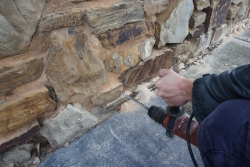
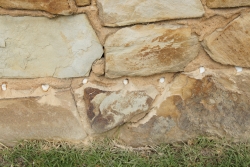
Salt Damp Inspection in AdelaideThe Safest, Fastest, Cleanest and Most effective method available.The DPC Cream is introduced along a mortar course at regular intervals (100-120mm centres) by simply injecting it into pre-drilled holes with a hand held application gun. The Cream then diffuses before curing to form a continuous water-repellent barrier, preventing further damp from rising up the wall. Since the 1950's, paraffin based liquid solvent chemical injection systems which work in a similar way have been used with some degree of success. However, from the householders point of view, our Cream has a number of important advantages over these systems which it has been developed to replace. The EnvironmentThe Cream has been designed with the environment in mind and does not use a liquid chemical solvent as a carrier for those ingredients. The formulation is based on silicones derived from quartz, which are widely used to manufacture a wide variety of products from medical instruments to cosmetics and sealants. This in turn is introduced into the wall via a water-based cream carrier that contains no hydro-carbon solvents and is non-caustic and non-flammable. People with allergies have no cause for concern. FastThe Cream can be injected 2-3 times faster than ordinary liquid injection fluids. Treatment can therefore be completed earlier, minimising cost and disruption to the householder, with no unsightly bottles protuding from the wall for a long period of time. Because of this, and the lack of any unpleasant smells, all rooms treated including bedrooms, are habitable the same day. Another benefit of this method is that we can treat cavity walls from one side only by simply drilling from the outside sleave across the cavity and into the internal sleave to within 10mm of your skirting boards. The Cream can then be injected into both sleaves from the outside which means there is no need to remove the skirting boards/tiles from the inside and drill on both sides of the wall. Once again this saves both time and cost, and also prevents a mess inside your house! CleanThe Cream is not injected under pressure. Therefore the risk of fluid leaking into neighbouring rooms or properties and causing damage is eliminated. Being a water based cream which is injected by nozzle directly into pre drilled holes, it also eliminates the risk of damage to carpets and floor covers caused by spillage common with liquid injection fluids which if not pumped under high pressure, are gravity fed through protruding bottles that apart from being unsightly, are also prone to leak. The Cream does not contain any hydrocarbon solvents, is non toxic and has no smell. You can use your room the same day as the application. Bedrooms can be slept in the same night without the risk of irritating smells. No other injection system will offer this. EffectiveMost walls requiring Rising Salt Damp treatment have voids and/or fissures which provide the course of least resistance. Fluids will flow more readily through these voids minimising their effectiveness as even distribution of the coursing fluid is not assured. Using one of our products totally eliminates the uncertainty of uneven installation providing the most efficient method of application. The Cream is designed to control rising damp but walls can remain damp after DPC installation where they are severely contaminated with hygroscopic salts. Special measures may be required to provide long-term control of dampness in such walls. The Creams will migrate slowly through most dry masonry, but will work and migrate more efficiently and quicker if the masonry is damp. Its effectiveness is also subject to a correct Rising Damp diagnosis.
| How do I know if I have Rising Damp?Our products and services are specifically designed for the treatment of Rising Damp, so it is important to be certain that this is the cause of dampness before treatment begins. Other types of dampness that affect buildings (e.g. condensation, lateral damp, penetrating damp) are treated in different ways - freecall us on 1300 793 359 for advice. Diagnosis of dampness in buildings should be carried out by a specialist surveyor with a Moisture Meter, however, typical signs of Rising Damp include:
If you would like to arrange for a specialist surveyor to visit your property, please visit the contact page or phone 1300 793 359.
 |
 |